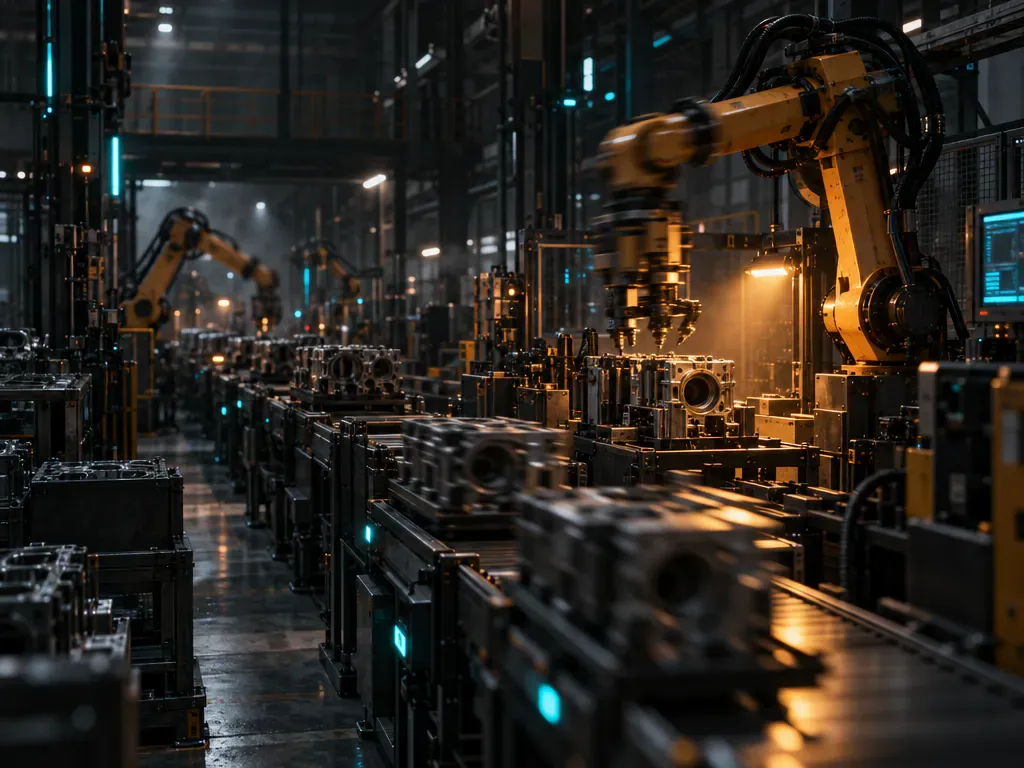
Industries · Manufacturing
Less line downtime. More hours producing.
For plants with production lines, compressors, motors and panels that cannot stop. Every downtime event with a cause, a cost and an owner to make sure it doesn't happen again.
01 · The problem
Where production hours disappear.
?
Downtime with no recorded cause
The line stopped for 40 minutes, restarted and nobody wrote down why. Next week it happens again.
3×
The same failure, again and again
Same bearing, same sensor, same shift. Without history per asset, every failure looks like the first.
$
The critical spare that wasn't there
An hour of line downtime waiting for a low-cost part nobody flagged as critical.
02 · How it works
From line downtime to root cause removed.
Maintenance and production working from the same data.
- 01
Record
The operator reports the downtime from the line with a QR code; exact time and asset are captured.
- 02
Respond
The work order goes out with priority, the right-skilled technician and parts at hand.
- 03
Close
Cause, downtime, parts and evidence stay on the work order.
- 04
Analyze
The reliability agent spots patterns and flags the failure that keeps coming back.
- 05
Prevent
Preventive work adjusts by run hours or cycles and is scheduled into changeovers.
03 · Line downtime
Every minute of downtime, with asset, cause and cost.
Downtime events are logged with start, end and cause, and charged to the asset and the line. Cost is calculated with the downtime rate you define.
- Downtime events with start, end and failure code
- Downtime cost by line and by asset
- Operator reports by QR from the line
- Availability by line and by shift
04 · Reliability
The repeat failure stops being a surprise.
The reliability agent cross-checks work order history and flags assets with repeat failures, explaining what they have in common and since when.
- Repeat failures by asset and failure code
- MTBF and MTTR by asset and by line
- Explanation of the detected pattern
- Recommendation a human approves or dismisses
05 · Efficiency
Line OEE, with the share that belongs to maintenance.
Availability comes from the downtime logged on work orders. Combined with the production data you already have, maintenance knows how much OEE each asset costs.
- Line availability calculated from work orders
- Planned and unplanned downtime hours
- Changeover time kept apart from failures
- Comparison across lines and shifts
06 · Who uses it
Five roles, five reasons to use it.
Plant manager
“Maintenance always asks for more budget without data.”
Every maintenance dollar is tied to an asset, a line and downtime avoided or suffered.
Maintenance manager
“My team is already buried in corrective work.”
The reliability agent shows which failures repeat, so you attack the ones that cost the most hours first.
Production supervisor
“Reporting downtime takes me away from the line.”
Scan the asset's QR code, pick the cause, done. The work order opens without calling anyone.
Maintenance technician
“Forms don't work on the shop floor.”
Checklist, photos and parts from your phone, even offline. And the asset's history before you open it up.
Warehouse lead
“I never know which spare is critical.”
Each asset has its critical spares defined, and the reorder alert arrives before they run out.
07 · The model
Your plant, as it is.
Every object in your operation has its place in Mantenix.
- Production lineAssets
- Motor, pump or compressorAssets
- Line downtime with causeWork orders
- Preventive by run hours or cyclesPreventive maintenance
- Changeover windowPreventive maintenance
- Repeat failureAI agents
- Critical spareInventory & quotes
- Machine LOTOHealth, safety & environment
- Shift technicianField app
- Availability and OEE by lineAnalytics
08 · Capabilities
Everything the platform gives your plant.
- Plant, line and asset hierarchy
- Downtime with cause and failure code
- QR downtime reporting from the line
- Preventive by calendar, run hours or cycles
- Scheduling into changeover windows
- AI detection of repeat failures
- Critical spares per asset
- Stock reorder alerts
- LOTO and permits to work
- Offline field app
- Availability, MTBF and MTTR by line
- Downtime cost by line and asset
09 · FAQ
What they ask before saying yes.
Does Mantenix calculate full OEE?+
Mantenix calculates availability from the downtime logged on work orders. Performance and quality come from your production data; you can export both to combine them.
Does it connect to sensors or the PLC?+
Mantenix works with meter readings recorded on work orders or loaded by you, such as run hours or cycles, to trigger preventive work.
Can I schedule preventive work during changeovers?+
Yes. Preventive tasks can be grouped and scheduled into planned downtime windows so the line doesn't stop twice.
How is downtime reported from the line?+
The operator scans the asset's QR code, picks the cause and the request comes in with the exact time. The intake agent turns it into a work order.
Does it work across several plants?+
Yes. Each plant is a site with its own lines, assets, technicians and warehouses, and you can compare KPIs across them.
Bring your most troublesome line. We'll model it in the demo.
One hour with your real assets, downtime history and spare parts. If it doesn't fit, we'll tell you.
Request a demo